Peptides – What You Should Know
Peptides have quickly become one of the most talked-about topics in health, fitness, recovery, weight loss and appearance. Promoted heavily through social media, podcasts, online clinics and influencers, peptides are often presented as the next breakthrough for building muscle, recovering from injuries, losing body fat, improving appearance or even slowing the aging process. But the word “peptide” covers a very broad category, and not all peptides are the same.
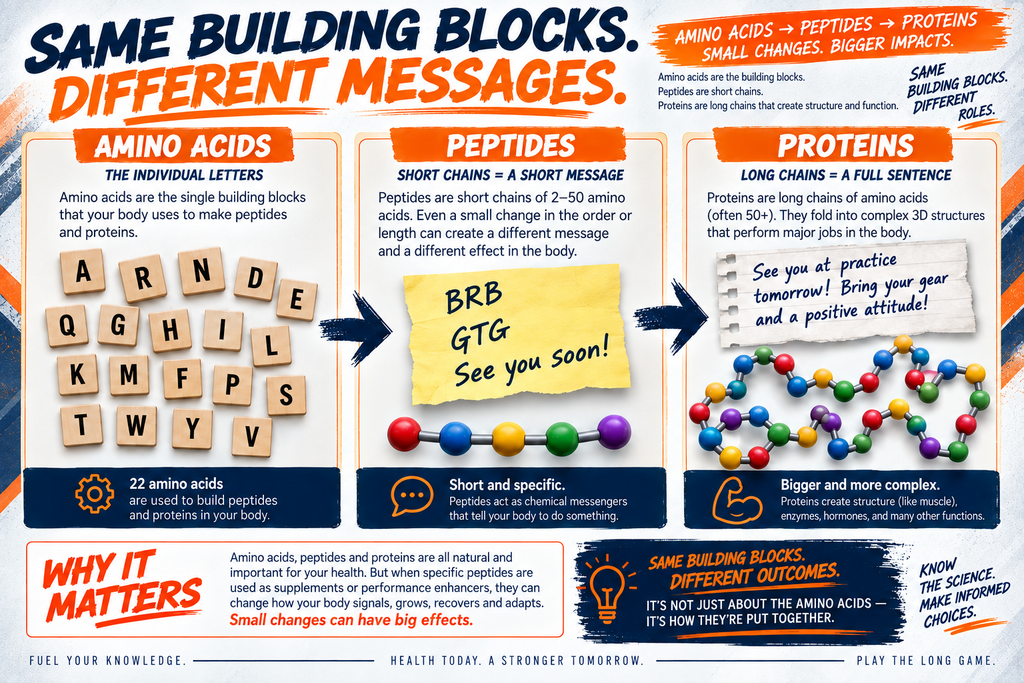
Peptides are short chains of amino acids, the building blocks that make up proteins. Many peptides occur naturally in the human body and act as signaling molecules involved in important biological processes. Peptides have also played an important role in medicine. There are peptide-based medications that have been studied in clinical trials and approved by the U.S. Food and Drug Administration (FDA) to treat specific medical conditions. FDA approval means a medication has undergone a scientific review of its safety, effectiveness, quality and intended use.
That is very different from many of the peptides currently trending online. Compounds such as BPC-157, TB-500, CJC-1295 and MOTs-C are frequently discussed or marketed for recovery, muscle growth, fat loss and other supposed benefits despite significant gaps in human research. For several of these substances, the FDA has identified limited or insufficient safety information, meaning we simply do not yet know their full short- or long-term effects.
Popularity is not the same as proof. A product being called a “peptide,” “research peptide” or even being offered through a clinic does not automatically mean it has been FDA-approved, proven effective or established as safe for that use.
Educational Content on this page developed with Jessica Beal-Stahl, PharmD
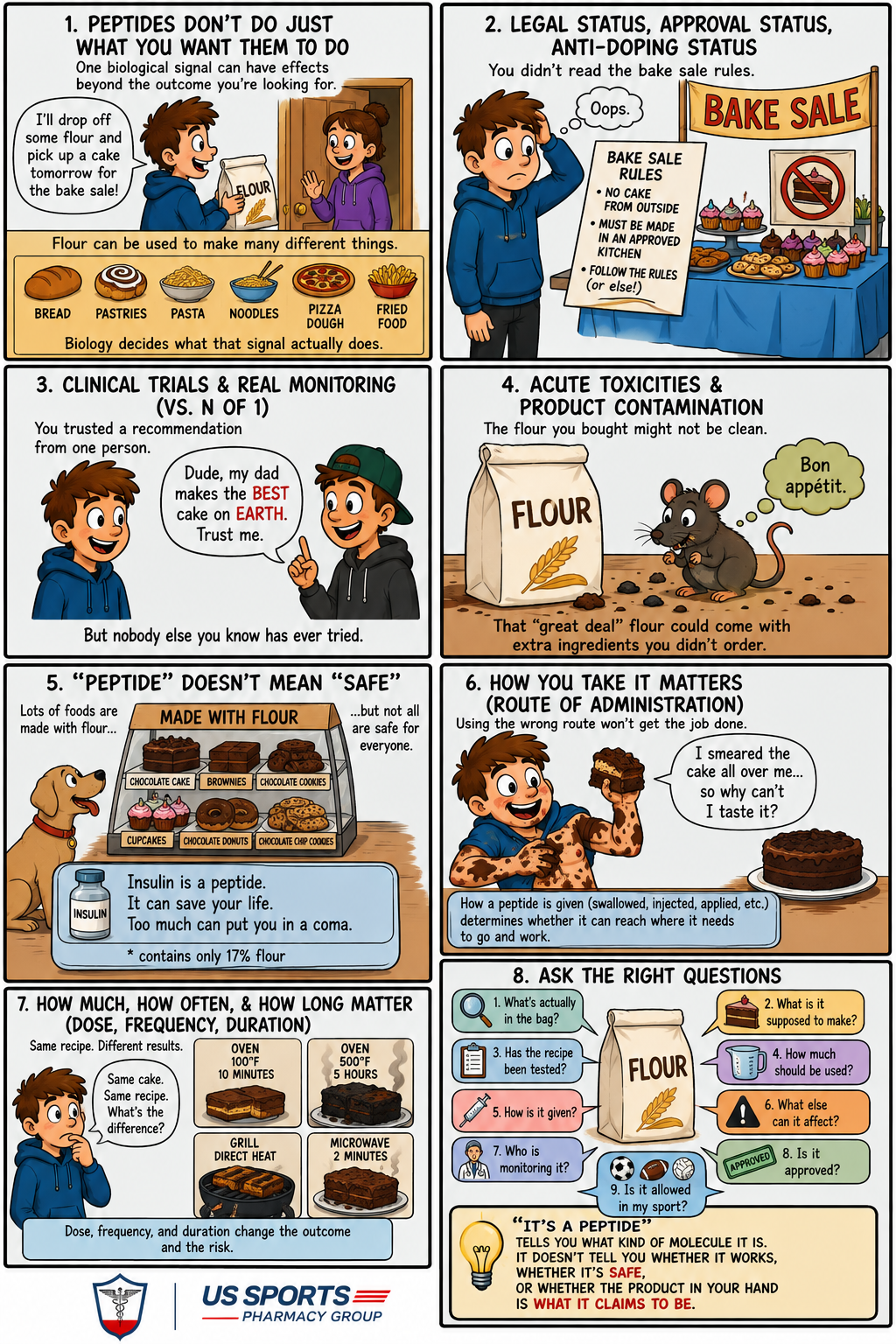
Are you in need of a fun way to try and explain peptides to your loved ones or those who are in your care? Thanks to the U.S. Sports Pharmacy Group, a cartoon graphic has been created to help illustrate how peptides work!